Ranch Land Or Recreation Parcel In Flathead County
Trying to decide whether a Flathead County property should work like a ranch or feel like a getaway? That question matters more here than many buyers expect. In a county where much of the land base is forest, wilderness, agricultural ground, or corporate timber ownership, larger tracts can be limited and highly varied. If you are comparing acreage in Flathead County, this guide will help you understand what separates ranch land from recreation land, what due diligence matters most, and how to think about value before you buy. Let’s dive in.
Flathead County is not a one-size-fits-all land market. County information shows that roughly 94% of the county’s land mass is in forest, wilderness, agricultural, or corporate timber ownership, which helps explain why available private tracts can look very different from one another.
That difference shows up fast on the ground. The county includes eight mountain ranges, average annual precipitation of about 21 inches, and a clear split between drier valley floors and wetter mountain terrain. In practical terms, two parcels with similar acreage may have completely different use potential.
The agricultural side of the market is real, but it is concentrated. USDA data from 2022 shows 1,019 farms and 160,817 acres in farms across the county, including 44,905 acres of pastureland, 72,436 acres of cropland, and 17,264 irrigated acres.
Some of the county’s most important farm ground is concentrated around Creston, the Flathead River outlet into Flathead Lake, the Stillwater River corridor northwest of Kalispell, and along the Flathead Lake shoreline. That means location is not just a lifestyle detail. It can directly shape whether land is productive, scenic, accessible, or some combination of all three.
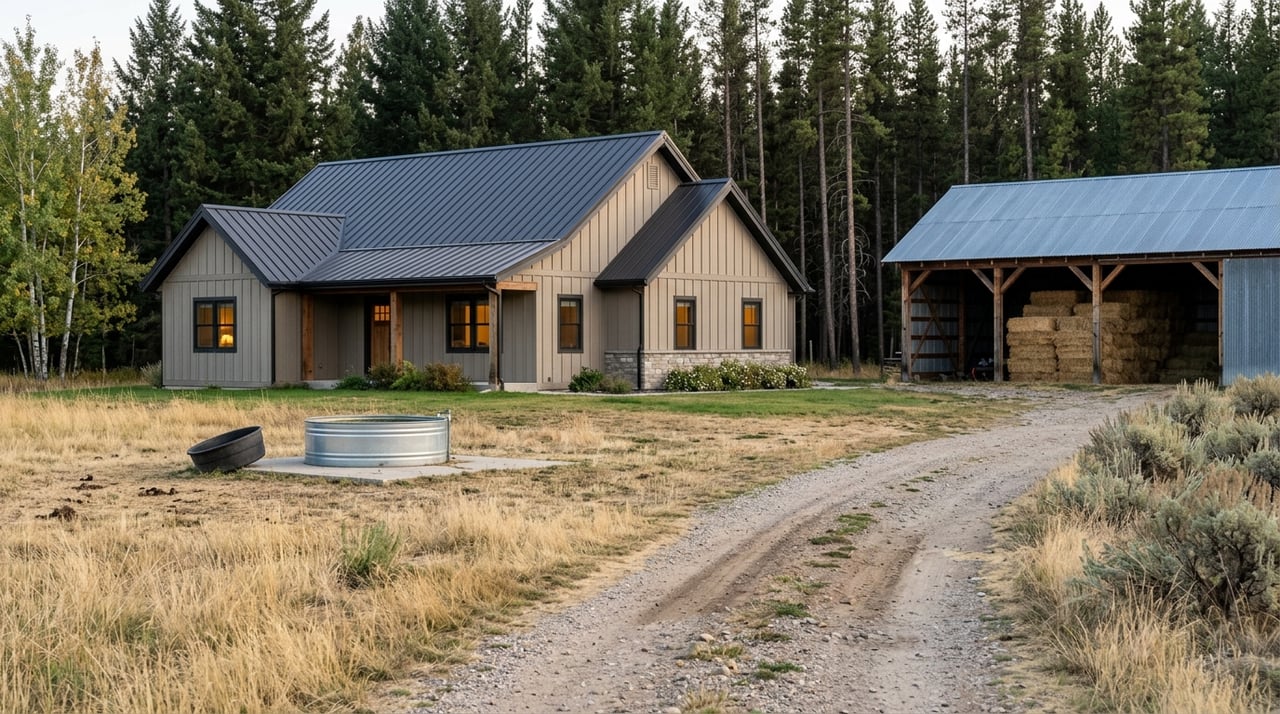
A ranch property needs to do more than look good on paper. It typically needs usable terrain, practical road access, space for equipment, and conditions that support livestock or hay production.
In Flathead County, that often means you are looking closely at forage, water, fencing potential, and year-round usability. Infrastructure matters too, especially if you need barns, corrals, utility access, or room to move trucks and trailers.
The county’s agricultural zoning framework also plays a big role. AG districts are intended to preserve agricultural land and reduce incompatible residential intrusion, and county livestock rules allow livestock in AG districts without an animal-unit cap, while some suburban agricultural and residential districts apply acreage and fencing rules.
A recreation parcel can serve a very different purpose. These properties are often valued for scenery, privacy, timber, wildlife, water features, or proximity to public land rather than for active agricultural production.
Because of that, a recreation tract may be steeper, more wooded, or more remote and still appeal strongly to buyers. A parcel that would feel inefficient for haying or livestock might be exactly what you want for seasonal use, hunting access, cabin plans, or a long-term legacy holding.
Many recreation buyers also accept fewer improvements at the start. Raw land with views, seclusion, and legal access may be more important than having every utility already in place.
In Flathead County, “ranch land” and “recreation parcel” are usually functional labels, not formal legal categories. The better question is whether the land can realistically support the way you want to use it.
If you want a working property, ask whether it can carry livestock, produce hay, and support dependable access. If you want a retreat, ask whether the parcel delivers privacy, scenery, and the kind of improvements, or lack of improvements, that fit your plans.
Access is one of the biggest value drivers in Flathead County land. County subdivision and zoning rules place real emphasis on ingress and egress, road easements, and road standards, so you want to know early whether access is simple, shared, seasonal, or dependent on private agreements.
This is especially important if you expect to move equipment, livestock, construction materials, or year-round vehicles. A beautiful parcel can become much less practical if the road situation is unclear or limited.
Topography is just as important as total acreage. A larger tract with steep slopes, timber, or broken ground may offer great recreation value but limited utility for ranch operations.
By contrast, a smaller parcel with flatter ground and easier movement can be more useful if your goal is grazing, hay production, or equestrian use. In Flathead County, raw acreage alone rarely tells the whole story.
Water is one of the clearest dividing lines between usable ranch land and a more recreational holding. For a working property, water may support livestock, irrigation, or pasture performance. For a recreation parcel, it may shape cabin plans, seasonal use, or future improvements.
Montana DNRC says a recorded water right is required for the majority of water uses, and new or expanded uses generally require a permit or notice if they began after June 30, 1973. That makes water-right review a major part of due diligence, especially if your intended use goes beyond simple enjoyment of the land.
Water also affects value in the market. Public listing examples show that frontage and irrigation can push pricing far above the county’s broader acreage ranges.
The presence, or absence, of infrastructure often reveals how a property fits into the market. Ranch-oriented parcels usually need improvements that support work, such as fencing, corrals, barns, utility service, or established access for equipment.
Recreation parcels often trade on a different set of strengths. Buyers may prioritize trees, views, wildlife, water adjacency, or nearby public-land access, even if the site is mostly raw.
Utility readiness can make a meaningful pricing difference. One public example in West Valley marketed electricity on site and completed septic approval, which is a useful reminder that even basic setup work can materially affect value on smaller tracts.
Flathead County treats land divisions creating parcels under 160 acres as subdivisions. County review emphasizes issues such as access, water supply, sewage disposal, wildlife habitat, and open space.
If you are buying with future building or division plans in mind, this step matters early. Assumptions about splitting land later can lead to expensive surprises.
The county Road and Bridge Department maintains about 350 miles of paved roads and 550 miles of gravel roads. The county also posts seasonal load limits on some roads during spring thaw.
That may not sound like a big issue until you need to haul hay, move heavy equipment, or schedule construction deliveries. For larger or more remote tracts, road condition and seasonal restrictions deserve a close look.
Parcels near rivers, wetlands, or lakes need extra attention. County floodplain maps affect minimum building requirements and insurance decisions, and the lakeshore protection zone extends 20 horizontal feet from the lake perimeter at mean annual high water.
If a parcel’s appeal is tied to water, make sure you understand the buildability and permit implications before you get too far down the road. Water adds value, but it can also add complexity.
Land stewardship matters in Flathead County. The county states that private landowners are responsible for controlling noxious weeds on their property, and it identifies current priority weeds including Canada thistle, spotted knapweed, oxeye daisy, orange hawkweed, tansy ragwort, common tansy, leafy spurge, houndstongue, and St. Johnswort.
If you are evaluating ranch land, pasture condition and weed pressure affect both usability and future cost. If you are buying for recreation, weeds still matter because they can reduce habitat quality, native plant diversity, and the overall experience of the property.
There is no single “normal” price per acre in Flathead County. Public listing examples show a wide spread based on access, water, improvements, and location.
At the smaller raw-land end, a 22-acre parcel near Flathead Lake was listed at about $22,500 per acre, while a 25.8-acre wooded parcel in Marion was listed at about $29,031 per acre. Those numbers show how even unimproved land can command strong pricing in desirable settings.
At the larger recreation end, discounts can appear. A 252-acre off-grid tract bordering Flathead National Forest was listed at about $4,286 per acre, and a 640-acre recreation parcel near Ashley Lake was listed at about $3,300 per acre.
Water and improvements can push prices much higher. Public examples include a Stillwater River frontage property at about $79,221 per acre, a Flathead River frontage parcel at about $210,531 per acre, and an irrigated pasture tract with Ashley Creek frontage at about $66,892 per acre.
The takeaway is simple: acreage does not set value by itself. In Flathead County, productive valley land, mountain retreats, waterfront tracts, and improved horse or ranch properties each follow different pricing logic.
Before you focus on price per acre, get clear on the job the land needs to do for you. If you want a working property, prioritize water, usable ground, zoning, access, and infrastructure. If you want a recreation parcel, prioritize privacy, terrain, scenery, and the kind of access that matches your intended use.
It also helps to think in terms of total ownership reality, not just purchase price. A lower-cost raw tract may require more work on access, utilities, weed control, or future permitting, while a higher-priced improved property may offer a more immediate and predictable path forward.
In a county as varied as Flathead, the best buy is not always the biggest tract or the cheapest acre. It is the property that matches your goals, your timeline, and your comfort with the land’s constraints and opportunities.
If you are weighing ranch land against a recreation parcel in Flathead County, having a grounded Montana brokerage in your corner can make the process much clearer. Tyree Real Estate, Inc. brings a high-touch, client-first approach to ranch, land, and lifestyle property searches across Montana, with the local stewardship and practical guidance buyers need when every tract is different.
Stay up to date on the latest real estate trends.
At Tyree Real Estate, our experienced team is deeply committed to the Montana community and your real estate success. Let us help you find your perfect home today!