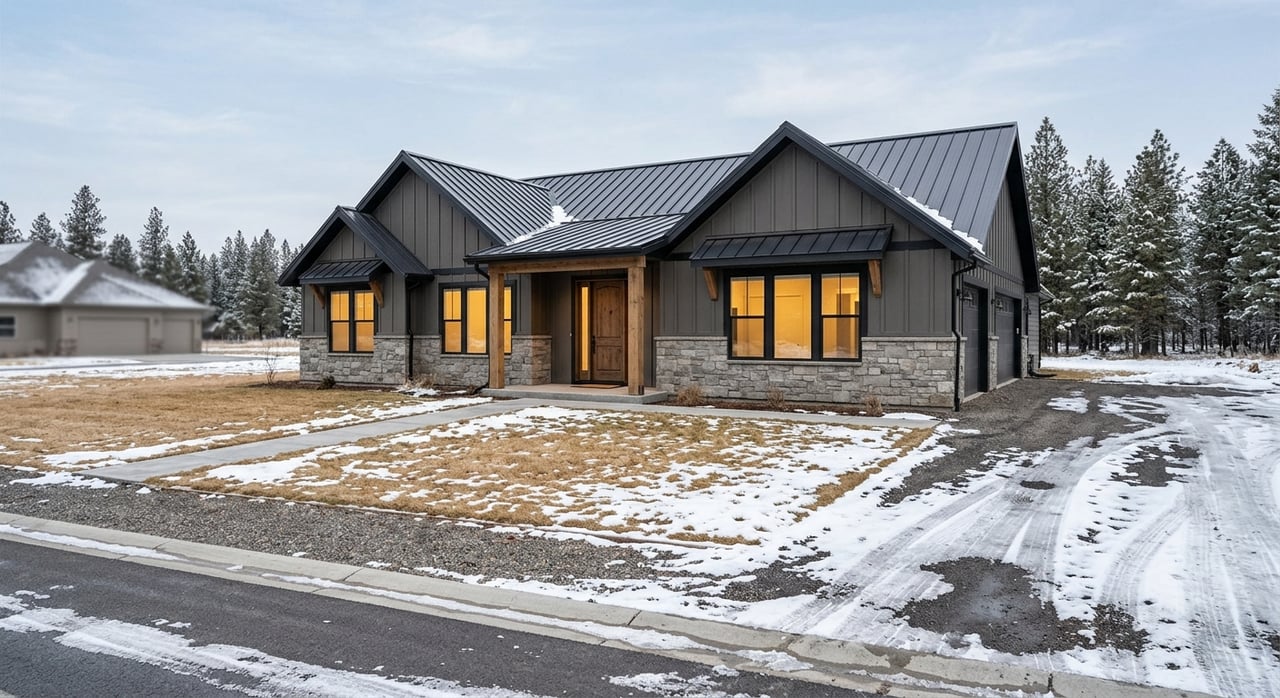
Choosing Between In-Town And Acreage Homes In Columbia Falls
If you are deciding between an in-town home and an acreage property in Columbia Falls, you are really choosing between two different day-to-day lifestyles. Both can be a great fit, but the right choice depends on how you want to spend your time, what kind of upkeep you are comfortable with, and how much land-related responsibility you want to take on. A clear look at utilities, roads, winter access, and future property plans can help you make that choice with confidence. Let’s dive in.
Columbia Falls is a compact city with 5,308 residents and just 2.20 square miles of land area, while Flathead County covers more than 5,000 square miles. That difference matters because living in town and living on acreage can feel very different, even when the drive into Columbia Falls is fairly short.
The city is also well placed for daily life and recreation. Columbia Falls is about 15 miles from Kalispell, 16 miles from the Whitefish ski area, and 17 miles from Glacier National Park. For many buyers, that mix of access and scenery is part of the appeal.
Commute times also help frame the decision. The mean travel time to work is 19.8 minutes in Columbia Falls and 19.6 minutes in Flathead County, which suggests that a roughly 20-minute drive is normal in this market. If you are comparing in-town convenience with more elbow room outside city limits, that is useful context.
In-town Columbia Falls tends to appeal to buyers who want a simpler ownership setup. The city provides water and sewer service, along with access to electric, natural gas, telephone and internet, garbage service, and other everyday services listed in the city profile.
That often means fewer moving parts behind the scenes. Instead of managing a private well or septic system, you are more likely to have municipal services already in place. For many buyers, that makes planning and maintenance feel more straightforward.
In-town living can also make daily errands easier. Because Columbia Falls is compact, services and routes are generally closer together than they would be on a more rural parcel. If you want a home base with less infrastructure to monitor, this can be a strong advantage.
Winter is part of life in Northwest Montana, so road maintenance deserves real attention. The City of Columbia Falls says plowing usually starts after about 4 inches of snow, and crews work as needed 24 hours a day to clear major routes before morning traffic.
The city also applies sand or chemicals on icy streets. Priority routes are handled first, and other city streets are treated as Priority 3. That does not mean every street is instantly clear, but it does create a more structured snow response than many rural buyers are used to.
There are still limits. The city does not plow private driveways or parking lots, and it does not plow alleys. Sidewalk snow and ice removal next to private property is also the owner’s responsibility.
Acreage properties often attract buyers who want more land, more privacy, and more flexibility in how they use the property. You may be looking for space for a shop, extra storage, or simply more separation from neighbors.
That extra space can come with a different ownership model. Outside city service areas, you may need to evaluate private water, septic, road access, and county-level approvals before you move forward. In other words, you are not only buying a house and land. You are also taking on more responsibility for how the property functions.
For many buyers, that tradeoff is worth it. If you value room to spread out and a more rural feel, acreage can be a great match. The key is understanding the practical side before you commit.
If a property cannot connect to city water, Flathead County says the Montana DNRC must be contacted to obtain water rights to drill a well. That is a major difference from buying in town, where city water service may already be in place.
Montana DEQ also notes that private wells are common, but DEQ does not regulate private-well water quality. It recommends annual well checkups and at least annual testing for coliform bacteria and nitrates. If you are considering acreage, water testing history and well maintenance records deserve close review.
For properties not connected to a municipal or publicly owned sewer system, Flathead County sewage regulations apply. The county says it is best to get septic approval before drilling a well or building a house.
This becomes especially important if you are buying a smaller acreage parcel and already thinking ahead. The county says parcels divided into lots smaller than 20 acres may involve a Certificate of Subdivision Approval, or COSA, and buyers should confirm what the land is approved for before moving forward.
That can affect future plans like a guesthouse, second dwelling, or additional RV site. Even if the property looks like it has room, the approval history and septic setup may limit what is actually allowed.
A rural-feeling property near town does not always mean full rural independence. Flathead County says that if a public sewer line is readily available within 200 feet and the owner approves the connection, the applicant generally must connect unless an exception applies.
That is why location alone does not tell the whole story. A parcel on the edge of town may still have utility obligations that differ from a more remote property. It is smart to confirm those details early.
Nearby NOAA normals at Kalispell Glacier Park Airport show annual snowfall of 54.4 inches, annual precipitation of 16.76 inches, and a January mean temperature of 24.1 degrees Fahrenheit. In this part of Montana, winter planning is not optional. It is part of ownership.
That matters whether you buy in town or on acreage, but the experience can be very different. City streets and county roads are not maintained the same way, and private roads add another layer to evaluate.
Flathead County says it does not use a bare-pavement approach and instead provides a reasonable service level for public roads that fits Northwest Montana weather. The county road department also maintains about 350 miles of paved road and 550 miles of gravel road.
That helps explain why winter access can vary more in rural areas. Road type, location, and storm conditions can all affect how quickly access improves after snowfall.
The county says snow removal may start at 5:30 or 7:30 a.m. depending on conditions. It also notes that landowners should not push snow onto county roads, and private driveways or roads should not be plowed across a county road because of berm and liability concerns.
If you buy acreage, your driveway may become one of your biggest winter considerations. The county does not handle private driveways or private roads, so that maintenance falls on the owner.
That can mean arranging snow removal equipment or service, managing snow storage, and thinking through access for guests, deliveries, and emergency vehicles. It is one of the biggest lifestyle differences between in-town and acreage ownership.
Flathead County uses spring load limits to protect roads during thaw, typically expressed as 350 to 400 pounds per inch of tire width depending on the road. If you expect heavy deliveries, construction activity, or equipment use, that is worth checking before closing.
For some buyers, this is a minor issue. For others, especially if you plan improvements soon after purchase, it can affect timing and logistics.
If you want simpler utilities, more predictable road maintenance, and easier access to daily services, an in-town Columbia Falls home may fit you best. It can offer a more streamlined ownership experience, especially if you prefer fewer land systems to manage.
If you want more land, more privacy, and more flexibility for outbuildings or hobby use, acreage may be the better path. You just need to be comfortable with the added responsibility of wells, septic systems, road access, and winter maintenance.
Neither option is better across the board. The right choice depends on how you want to live, how hands-on you want to be, and how much property complexity you are prepared to handle.
Before you move forward on either type of property, it helps to confirm a few basics.
A careful review upfront can save you from surprises later. It can also help you compare two homes more fairly, especially when one looks easier on paper but the other better matches your long-term goals.
Whether you are leaning toward a low-maintenance in-town home or a Montana acreage property with room to breathe, having the right local guidance can make the decision much clearer. If you want help weighing the tradeoffs and finding a property that fits your lifestyle, connect with Tyree Real Estate, Inc..
Stay up to date on the latest real estate trends.
Lifestyle

At Tyree Real Estate, our experienced team is deeply committed to the Montana community and your real estate success. Let us help you find your perfect home today!