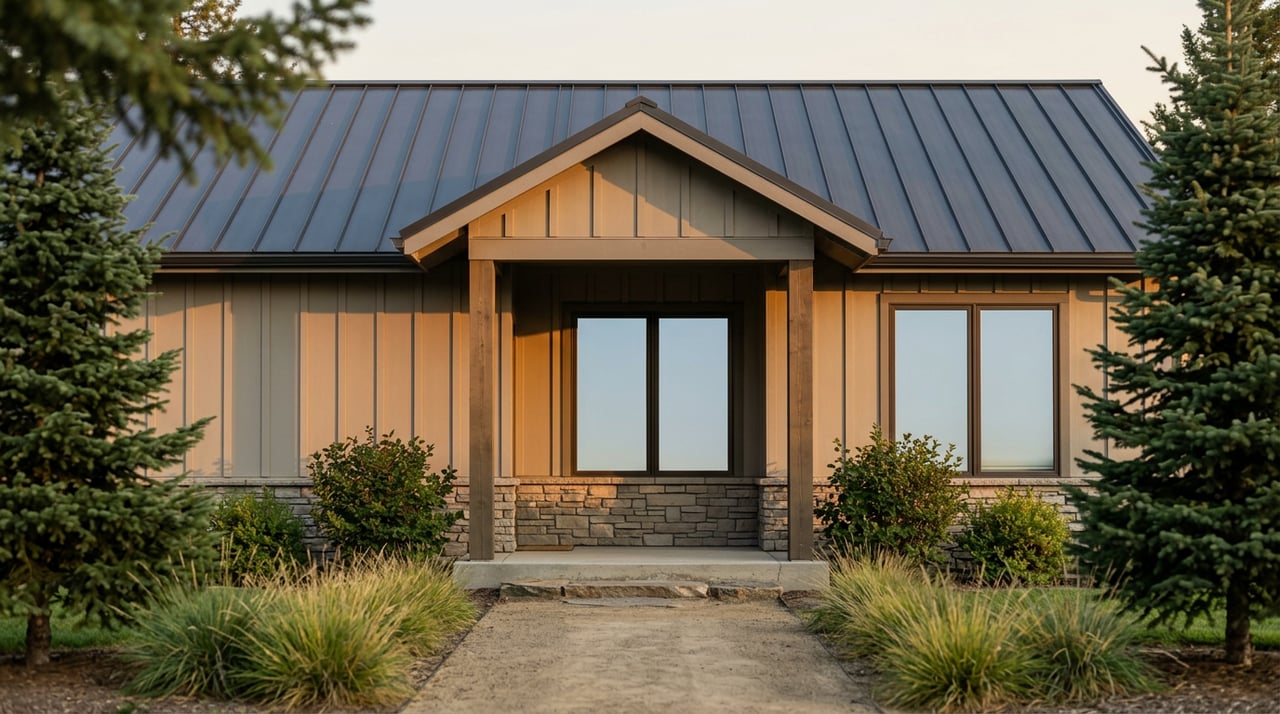
Whitefish Real Estate Market 2026 Is Operating in Two Tiers
The average home in Whitefish spent 185 days on the market in late 2025, more than double the 75 days recorded the prior year. The median sale price over the same period cleared $1,057,500 — down 10 percent year-over-year as of March 2026, but still comfortably above seven figures. Read those two numbers side by side and you get a market that appears, simultaneously, expensive and stuck.
Both readings are accurate. Neither is complete.
Whitefish has split into two markets sharing one zip code, and the aggregate statistics are averaging them into a picture that serves neither buyers nor sellers particularly well. Understanding which market a specific property belongs to determines whether you are in a competitive multiple-offer situation or holding more negotiating leverage than you probably expect. A third variable — a March 2026 Montana Supreme Court ruling that most buyers haven't encountered yet — sharpens the picture further.
Not all 520 active Whitefish listings are sitting idle. Properties in walkable proximity to downtown and in ski-adjacent corridors continue to draw competitive interest, driven by a buyer pool that includes high-income remote workers who represent roughly 21 percent of the local labor force as of early 2026. For these buyers the calculus is straightforward: Whitefish Lake access, a short drive to Glacier Park International Airport 12 miles away, and a walkable downtown make a property functionally irreplaceable within its category. When the right listing hits that pocket, it moves.
The other inventory is pandemic-era stock: homes purchased or priced at peak 2021–2022 values, often farther from the core, now sitting with sellers who haven't fully marked to the current market. This is where the 185-day average is living. These listings accumulate days while downtown and ski-adjacent properties turn over, and the aggregate median absorbs both into a single misleading figure.
| Downtown / Ski-Adjacent | Pandemic-Era Outlying Inventory | |
|---|---|---|
| Demand | Competitive; multiple offers on well-priced listings | Soft; extended days on market |
| Price trend | Holding or firming | Facing correction pressure |
| Buyer leverage | Limited | Meaningful |
| What drives value | Walkability, lake and mountain proximity | Square footage, lot size |
| Typical buyer profile | Lifestyle-led remote worker, second-home buyer | Broader pool; more rate-sensitive |
Knowing which tier you are in before making an offer changes the negotiation entirely. A buyer who treats a tier-one property like tier-two inventory will lose it. A buyer who treats tier-two inventory like tier-one will overpay.
Days on market is not a price signal. It is a seller-behavior signal. When a property sits for 185 days, the most common explanation is not that buyers cannot afford it — it is that the seller's price expectation was set in a different market.
The broader Montana context reinforces this. Statewide in March 2026, home prices were down 7 percent year-over-year per Redfin data, and 16.2 percent of active listings had seen price reductions, up from 14 percent the prior year. The sale-to-list ratio fell to 83.3 percent. In that environment, the seller who listed at 2022 prices is now watching months accumulate while buyers transact around them on correctly priced inventory.
For buyers, extended DOM on a Whitefish listing is often a negotiating opening, not a red flag. It tells you the seller has been waiting. Sellers who have been waiting are, almost by definition, more flexible than sellers who listed last week.
For sellers, the same data argues for discipline at the time of listing. Overpriced pandemic-era inventory is not holding value by sitting longer. It is training buyers to discount it.
Here is the variable that the days-on-market conversation mostly ignores.
In March 2026, the Montana Supreme Court unanimously upheld Senate Bills 323 and 528 in Montanans Against Irresponsible Densification v. State. SB 323 allows a duplex to be built by right on any lot zoned for a single-family residence. SB 528 allows an accessory dwelling unit — a garage apartment, a backyard cottage, a basement suite — by right on single-family lots across the state. The ruling means both laws are now in full effect in Whitefish, without a public hearing requirement, without a variance process, and without the neighbor notification that governed development decisions before these laws passed.
The City of Whitefish had flagged a specific concern during the original legislative debate: in a market already saturated with short-term rentals, ADUs built without owner-occupancy requirements would likely function as additional tourist accommodations rather than workforce housing. That concern is on the record. It did not change the outcome at the Supreme Court.
What this means for buyers is concrete. If you are purchasing in a Whitefish single-family neighborhood based partly on an assumption that its residential character will persist, the legal foundation for that assumption changed this spring. A neighbor can add an ADU. A seller can convert to a duplex. Neither action requires a public process you can participate in.
This is not an argument against buying in Whitefish. It is an argument for knowing exactly what you are buying. Buyers focused on tier-one properties — downtown, ski-adjacent, lakeside blocks — are purchasing into areas where density may reinforce long-term value. Buyers focused on quieter outlying neighborhoods should work this change into their due diligence, not discover it after closing.
The 2025 legislative session compounded these shifts. Senate Bill 532 extended ADU rights to parcels outside city limits with a 15-day expedited review for lots already connected to public water and sewer. Senate Bill 243 allows buildings up to 60 feet in cities of more than 5,000 residents. House Bill 492 strips most parking mandates for new residential construction in those same cities. SB 243 and HB 492 both take effect October 1, 2026. For anyone tracking Montana's broader housing reform trajectory, Whitefish is not at the edge of these changes — it is in the middle of them.
Layered on top of statewide law is a local planning process that just completed its public hearing cycle. Vision Whitefish 2045 — the city's community plan and future land use map — went before the Whitefish City Council in March and April 2026. The plan governs how the city approaches growth, density, and infrastructure investment over the next two decades.
Vision 2045 does not override the ADU and duplex rights already secured under state law. It operates alongside them. But it will shape where new density concentrates, which corridors receive infrastructure investment, and which parts of the city are positioned to absorb growth constructively. Buyers considering properties in areas the plan designates for increased mixed-use or residential density are evaluating a different long-term profile than buyers in areas the plan treats as stable.
This is the context behind a number that doesn't reach the portal headlines: the Flathead County single-family median — covering Whitefish, Kalispell, Columbia Falls, and Bigfork combined — moved from $680,000 to $689,000 between 2024 and 2025, a modest increase even as condo days on market climbed from 168 to 207 days across the same period. The valley is not declining uniformly. It is sorting. Whitefish is sorting more visibly than its neighbors because it carries more demand pressure and more regulatory change at the same time.
How do I identify which tier a specific Whitefish listing belongs to? Location and listing history are the two fastest signals. Properties within walking distance of downtown, on or near Whitefish Lake, or adjacent to Whitefish Mountain Resort tend to fall into the competitive tier. Extended DOM — anything approaching or exceeding 90 days in the current market — typically indicates tier-two inventory where seller price expectations haven't caught up with current conditions. An agent tracking closed sales by sub-area rather than zip code can give you a precise read.
What does the ADU ruling mean for someone buying a single-family home in Whitefish? Your neighbors now have the legal right to add a dwelling unit to their lot without a public approval process. In practice, not every neighbor will exercise that right, and some established neighborhoods have HOA covenants or deed restrictions that limit it. Before closing on any single-family property, confirm whether private deed restrictions are in place, and evaluate whether surrounding lots have the physical characteristics — lot size and setback clearance — to accommodate ADU construction.
Is this a buyer's market? For tier-two inventory, yes, meaningfully so. Extended DOM, a statewide sale-to-list ratio below 84 percent as of March 2026, and rising price-reduction rates all point toward buyer leverage on correctly identified listings. For tier-one inventory the answer is closer to: it depends on the week. Well-priced downtown and ski-adjacent properties still attract serious competition. The error buyers make is treating the market as uniform in either direction.
Should Vision 2045 factor into a property search? Yes, particularly for buyers focused on long-term hold value. The plan identifies where density investment will concentrate and where it won't. Properties in corridors the plan designates for increased development sit in a different risk-and-upside position than properties the plan treats as stable residential. The full plan and future land use map are publicly available at engagewhitefish.com.
The Whitefish market rewards buyers and sellers who understand which version of it they're actually in. Burke Tyree tracks both tiers, follows the regulatory changes as they move, and can walk you through what the current numbers mean for your specific property or search. Reach out when you're ready to have that conversation.
Stay up to date on the latest real estate trends.

Lifestyle

At Tyree Real Estate, our experienced team is deeply committed to the Montana community and your real estate success. Let us help you find your perfect home today!