Is the water on a ranch the deal-maker for you? In Montana, you are not just buying what you see flowing in a creek or coming from a well. You are buying legally defined water rights that determine how much you can use, when you can use it, and for what. In this guide, you’ll learn how Montana water rights work, what to check around Helena and Lewis and Clark County, and a practical plan to protect your purchase. Let’s dive in.
Montana water rights basics
Prior appropriation, plain and simple
Montana follows prior appropriation, often summed up as first in time, first in right. A senior right with an earlier priority date gets water before a junior right in times of shortage. Your reliability depends on that priority date and your ability to prove historical, beneficial use.
What makes up a water right
Every right is defined by specific elements:
- Point of diversion and means of diversion (headgate, ditch, pump)
- Place of use and beneficial use (irrigation, stock, domestic, municipal)
- Season of use, flow rate or volume, and priority date
These details must match what you see on the ground. If the paperwork and the property do not align, you may face curtailment or transfer issues later.
Types of rights you’ll see
- Surface diversion rights: Pulling water from creeks, rivers, or springs via headgates, ditches, or pumps.
- Groundwater/well rights: Using appropriated groundwater from drilled wells, subject to permits or certificates.
- Stock and domestic uses: Recognized beneficial uses with their own history and priorities.
- Appurtenant vs. severed rights: Many rights are tied to specific parcels, but rights can be changed or transferred under state processes.
Permits, certificates, decrees, and claims
New appropriations or changes usually require approval by the Montana Department of Natural Resources & Conservation (DNRC). Many existing rights are evidenced by DNRC certificates or Water Court decrees, and some older claims remain in adjudication. If a seller only asserts a right by tradition, you will want formal records that confirm it.
The risk of nonuse
Montana expects beneficial use. Extended nonuse can invite abandonment or forfeiture claims, especially for junior rights. Document historical use and resume use promptly if needed.
Helena-area considerations
Local sources and hydrology
Helena-area ranches may rely on small creeks and tributaries, springs, and irrigation deliveries from ditch systems, as well as shallow and deeper wells that draw local aquifers. Groundwater yield varies within the county. Valley floors and benches may have stronger production, while some upland areas are more limited. Check well logs and pump test data early if irrigation volume matters to your operation.
Ditch companies and associations
Many irrigation deliveries run through local ditch companies or mutual associations. Expect membership requirements, assessments, and maintenance responsibilities. Delivery reliability depends on the ditch company’s operations, infrastructure condition, and the priority of source rights. Review bylaws, assessment history, and any easements tied to laterals or turnout points.
Adjudication status and documentation
Water rights may be adjudicated and decreed, DNRC-certified, or pending as claims. Adjudication status affects certainty and transferability. Unresolved claims can introduce title risk, so verify the status and make it part of your contract contingencies.
Municipal vs. agricultural supply
Some homes near Helena may be on municipal water for domestic use. That does not cover irrigation. Confirm whether the residence is on municipal service and whether the ranch irrigation supply is separate, including wells, surface diversions, or ditch deliveries.
Water quality and legacy issues
Portions of Montana have a history of mining and industrial uses. In and around Lewis and Clark County, review county and state records for known water-quality concerns that could affect irrigation or stock water. If you see red flags, consider testing.
Your due diligence checklist
Documents to request
- DNRC identifiers: certificate numbers, Water Court decree numbers, or claim numbers
- DNRC abstracts showing point of diversion, flow/volume, season, place of use, and priority date
- Well logs, well permits or registrations, and pump test results
- Ditch company membership records, bylaws, assessment history, and any easements or transfer agreements
- Historic proof of use: maps, photos, irrigation records, or measurements
- Title report and tax records showing appurtenancy and any liens tied to water infrastructure
On-site inspections
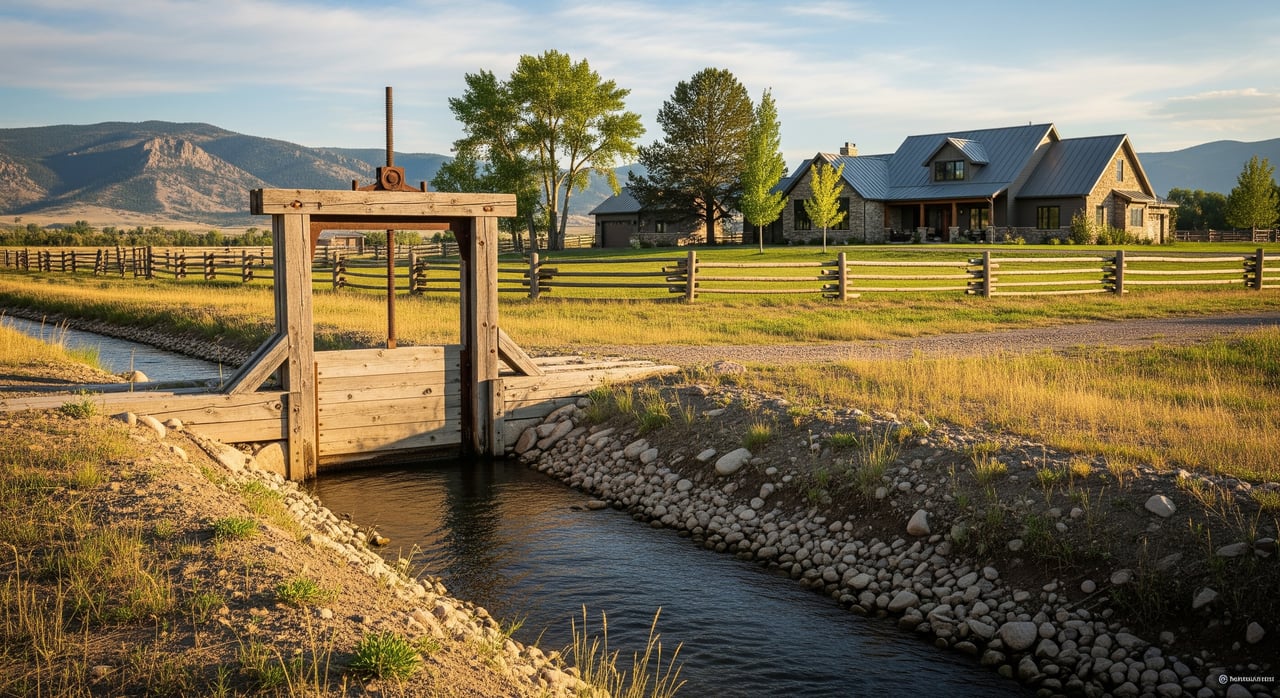
- Walk the system: headgates, ditches, pipelines, pumps, screens, and turnout points
- Confirm that legal points of diversion and places of use match what is physically on the property
- Evaluate condition and likely conveyance losses in ditches and laterals
- For wells: verify depth, static water level, pump horsepower, construction details, and yield reliability across seasons
- Look for evidence of nonuse, blocked diversions, or disconnected pumps and ask why
Records and data checks
- Search DNRC water-rights records for abstracts and mapping
- Check Montana Water Court records for decrees or pending cases
- Review county documents for ditch easements and irrigated acreage
- Consult DEQ and county planning for environmental constraints or known contamination
- Where available, use USGS stream gage information to understand seasonal flow patterns
Legal and transactional items
- Confirm whether rights are appurtenant to the property or held by a separate entity
- Gather documentation for any change in point of diversion, place of use, season, or quantity
- Verify obligations for ditch or pump maintenance and any shared-cost agreements
- Determine whether the rights are senior or junior relative to neighbors
Professionals to consider
- Water-rights attorney for title, transfers, and decree interpretation
- Licensed hydrologist or water-resource engineer for flow measurements, reliability, and conveyance efficiency
- Well contractor or geologist for pump tests and well condition
- Surveyor to locate points of diversion and places of use when descriptions are unclear
Drought, priority, and operational risk
Seasonal and year-to-year variability is a fact of life. In dry years, junior rights can be curtailed when seniors call for water. Your ranch’s performance in low-flow periods depends on priority date, infrastructure condition, ditch company operations, and any storage or buffering capacity on site. Plan for variability and confirm that your business model still works under curtailment scenarios.
A practical Helena-area workflow
- Ask the seller for all water-right documents, well logs, pump testing, and any ditch agreements.
- Run public-record searches with DNRC, the Montana Water Court, and county offices.
- Match the paperwork to the ground. Confirm points of diversion, places of use, and irrigated acreage.
- Engage a water-rights attorney and a licensed hydrologist or well contractor early.
- Contact ditch companies about membership, assessments, and recent maintenance.
- Commission flow or pump tests if irrigation quantity will drive your decision.
- If you anticipate changes or a transfer, consult DNRC and your attorney for timing and risk.
- Build contract contingencies for water-right title, adjudication status, and minimum acceptable yield.
Contract terms to discuss with your attorney
- Seller delivery of all certificates, decrees, permits, and abstracts by a set date
- A contingency for your review and approval of water-right title and supply adequacy
- A representation about historical beneficial use, with no pending forfeiture or adverse claims
- Clear responsibility to cure defects before closing, or a mechanism for price adjustment or termination
- Assignment and notice procedures for ditch company memberships and lateral rights
Common pitfalls and how to avoid them
- Relying on tradition instead of records: Get DNRC and Water Court documentation and verify the details.
- Mismatch between paper and property: If a point of diversion or place of use does not match, address it before closing.
- Ignoring junior priority risk: Junior rights can be curtailed. Understand how your priority fares in dry years.
- Underestimating infrastructure costs: Ditches, pumps, and pipelines require maintenance and can add recurring assessments.
- Overlooking adjudication status: Unresolved claims add uncertainty. Confirm status and include appropriate contingencies.
- Assuming domestic supply equals irrigation: Municipal or domestic wells typically do not cover irrigation needs.
When you buy a ranch near Helena, water rights shape everything from grazing plans to crop yields. By focusing on priority date, proven beneficial use, reliable infrastructure, and clean paperwork, you protect both your operation and your investment. If you want a steady hand to coordinate due diligence and keep your transaction on track, connect with Tyree Real Estate, Inc. for experienced, client-first guidance across Montana.
FAQs
How do I confirm an enforceable Montana water right on a Helena ranch?
- Look for a DNRC certificate, a Water Court decree, or a documented permit or claim with a clear priority date and defined elements, then verify they match on-the-ground conditions.
Can water rights be sold separately from the land in Lewis and Clark County?
- Transfers can be possible through state processes; whether a right is appurtenant or severable depends on its history and records, and changes generally require DNRC approval and may involve the Water Court.
What happens if the seller has not used the water recently?
- Extended nonuse can lead to abandonment or forfeiture claims; document historical beneficial use and plan to resume use promptly if needed.
How do drought and low flows affect Helena-area ranches?
- Senior rights are satisfied first; junior rights may be curtailed, so reliability depends on priority date, ditch company delivery, infrastructure, and available storage.
Do I need a permit for a new well or a change in use?
- New groundwater appropriations and many changes in point or place of use, season, or quantity require state permitting; consult DNRC for your specific plan.
Who enforces water rights in Montana?
- DNRC administers permits and records, the Montana Water Court handles adjudication and claims issues, and courts support enforcement when disputes arise.