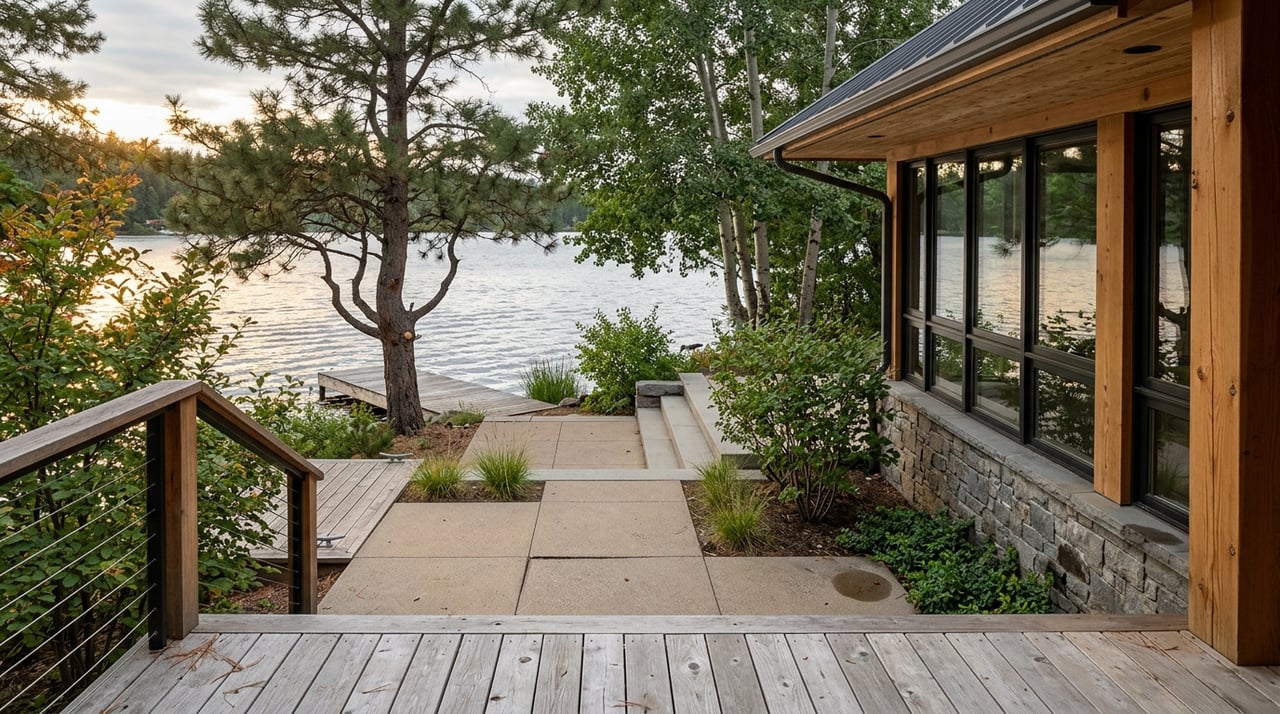
Buying Lakefront Or Lake-Access Property In Lakeside
Thinking about owning a place near Flathead Lake? In Lakeside, the difference between lakefront, lake-access, and lakeview can change how you use the property, what you can build, and what you may need to maintain over time. If you want to buy with confidence, it helps to understand the rules before you fall in love with the view. Let’s dive in.
When you shop for property in Lakeside, the listing language matters, but the legal setup matters more. Two homes can look similar online and offer very different rights once you review the deed, survey, and county records.
In Flathead County, true lakefront means the parcel actually borders the lakeshore. The county defines lake frontage as the part of the property that borders the lakeshore, measured between the side property lines at the water’s edge. That definition affects how the property is described and how shoreline rules may apply.
A lakeview property is different. In most cases, lakeview is a marketing description rather than a separate permitting category. You may get scenic views, but that does not automatically mean you have shoreline control, dock rights, or the same flexibility as a parcel with true frontage.
A shared lake-access property is different again. Flathead County encourages common shoreline facilities shared by two or more owners, but easement holders are not eligible for a lakeshore construction permit. Shared-dock permits also depend on the owners continuing to agree, which makes the exact access documents especially important before you buy.
Flathead Lake is a major part of what draws buyers to Lakeside. It spans 191 square miles and has 160 miles of shoreline, which makes it one of the defining features of the area and its outdoor lifestyle.
Still, the value of a waterfront or water-access property is not only about proximity to the lake. It is also about what rights come with the parcel, what improvements are already legal, and what future changes may be possible under county rules.
That is why two properties with similar price points can offer very different long-term value. One may come with fee-owned frontage and a documented permit history, while another may rely on shared access that is more limited than the listing suggests.
One of the most important facts for Lakeside buyers is that Flathead County regulates work near the shoreline. The county defines a lakeshore protection zone that extends 20 horizontal feet from the lake perimeter at mean annual high water.
Within that zone, many shoreline rules apply. Any work on a lake, lakebed, or lakeshore in the protection zone requires a Flathead County Lakeshore Construction Permit before work begins.
This can include projects such as:
The county also notes that this permit does not replace other permits that may be required by other agencies. In other words, shoreline work is rarely something you want to assume is simple.
Buyers are often surprised to learn how many installations are restricted in the protection zone. Flathead County prohibits a long list of shoreline-area improvements, including boat houses, wells, pump houses, sewage mains and service lines, elevated or cantilevered decks, impervious beach cover, hot tubs, large barbecue pits, asphalt, fuel storage tanks, and most roads or driveways.
These rules can affect how you picture using the property. A lot that feels ideal for a future upgrade may be much more limited once you understand what can and cannot go near the shore.
That does not mean a property lacks value. It simply means you should match your plans to the parcel’s actual constraints before moving forward.
Owning near the water can bring more ongoing responsibility than many buyers expect. In Flathead County, new lawns are prohibited in the lakeshore protection zone, native vegetation may be required for erosion control, and riprap must be placed at or landward of the mean annual high-water line.
The county also discourages excessive impervious cover because of water-quality and shoreline impacts. For you as a buyer, that means landscaping choices are not just cosmetic. They can affect compliance, erosion management, and future maintenance costs.
If the property includes a dock, buoy, or shore station, ask how it has been maintained. Flathead County says used docks, buoys, and shore stations should be inspected and disinfected before installation to reduce the risk of aquatic invasive species, and floating docks should be removed from the water by December 1.
Many Lakeside properties have been improved over time, and some may include older shoreline features. That can create opportunity, but it also calls for careful due diligence.
Flathead County says existing nonconforming shoreline structures can sometimes be maintained, repaired, or replaced if their dimension, location, and historical use stay the same, but a permit is still required. That makes one question especially important: is the current setup legal, grandfathered, or simply tolerated?
Before you buy, it is worth reviewing permit history for docks, riprap, water lines, retaining walls, and other shoreline work. A great-looking setup on showing day does not always mean it has the approvals you would want in place.
If you are buying lake-access property in Lakeside, access rights should be verified in the documents, not assumed from the listing description. Montana law makes clear that recreational-use statutes do not create a right to cross private property to reach surface waters.
That is why it is smart to review the deed, survey, easement documents, HOA materials, and any permit history tied to the access area. You want to know whether you are buying fee-owned frontage, deeded access, HOA access, or only an easement.
This point is especially important when a shared dock is involved. Shared-dock permits are conditional on continuing mutual agreement, so you should understand who has rights, who handles maintenance, and whether the arrangement clearly survives resale.
Even near the lake, utility answers are not always simple. Service can differ from one property to the next, and assumptions based on neighborhood reputation can be risky.
Flathead County says its septic regulations and construction standards changed on April 1, 2026. The county also says that if an approved public sewer line is readily available within 200 feet and the owner approves connection, the applicant must connect unless cost, physical impracticality, or easement issues make connection unavailable.
The county advises getting septic approval before drilling a well or building. If city water is not available and you are considering a well, the county FAQ says to contact DNRC.
Lakeside’s sewer picture is also evolving. DEQ issued a final wastewater permit for the Lakeside County Water & Sewer District in April 2025, and a 2026 DEQ notice described wastewater system improvements tied to limited capacity. For buyers, that means sewer availability should be confirmed with current district conditions rather than assumed from older information.
Floodplain review is another key step for shoreline-adjacent property. Flathead County uses FEMA Flood Insurance Rate Maps to determine minimum building requirements and flood insurance implications.
The county also states that standard property insurance does not cover flooding, while flood insurance is available through the National Flood Insurance Program. For you, this can affect both monthly ownership costs and future building or remodeling plans.
A parcel near the water may still be a strong fit, but it is wise to understand floodplain status early. That gives you a clearer picture of both risk and cost before you commit.
When you tour a lakefront or lake-access property in Lakeside, keep your questions practical and specific. A few direct questions can uncover issues that pictures and remarks do not show.
Ask about:
These are not small details. In a market like Lakeside, they shape how you can use the property and what your ownership experience may look like over time.
Not every buyer needs private frontage to enjoy life near Flathead Lake. Nearby public recreation can still be a meaningful part of the value equation, especially if you are open to lake-access or lakeview property.
Flathead Lake State Park includes five mainland units around the lake. West Shore State Park, about 6 miles south of Lakeside, offers a deep-water launch that is typically ice-free in winter.
For some buyers, that nearby public access can make a non-waterfront property more practical and more affordable. It may also broaden your search if your top goal is time on the water rather than direct shoreline ownership.
For parcel-specific questions, Flathead County Planning & Zoning administers the lakeshore protection and floodplain programs, while Flathead County Environmental Health handles septic and land-research questions. These offices are often the first stop when you want permit history and a clearer picture of property constraints.
That matters because shoreline applications can require site maps, plans, drawings, and other supporting material. In many cases, shoreline changes involve more than a simple verbal okay.
When you are buying a Lakeside property with water frontage or shared access, early due diligence can save you time, money, and stress. It can also help you compare properties based on real usability, not just marketing language.
Buying lakefront or lake-access property in Lakeside can be incredibly rewarding, but the best purchase is the one that fits both your vision and the property’s actual rights, permits, and limits. If you want a hands-on Montana brokerage to help you evaluate lifestyle properties with care and clear guidance, connect with Tyree Real Estate, Inc..
Stay up to date on the latest real estate trends.
Lifestyle

At Tyree Real Estate, our experienced team is deeply committed to the Montana community and your real estate success. Let us help you find your perfect home today!