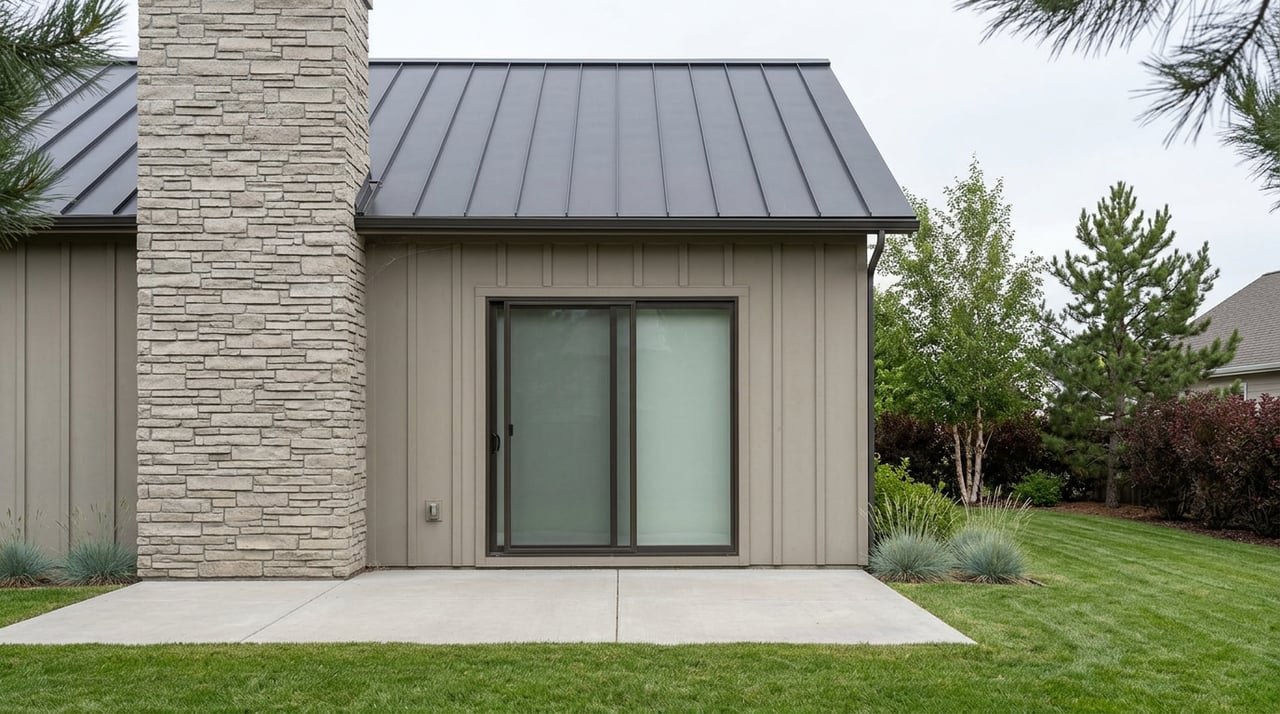
What Kalispell Real Estate Market 2026 Numbers Miss
Pull up four different sites for Kalispell home prices on the same afternoon and you will get four different answers, and not by a rounding error. One says the median sits in the low $500,000s. Another puts it near $570,000. A third reports $627,000. A fourth lands at $649,000. That is a spread of roughly $130,000 for what is supposedly the same city, the same month, the same market.
The instinct is to assume one source is right and the others are sloppy. That is not what is happening here. Kalispell's housing supply is being reshaped in real time by a wave of already-approved subdivisions moving through a permitting process the city rebuilt from the ground up this spring, and the number you see depends on which slice of that moving pipeline your source happened to catch.
Here is what each figure is actually built from, laid out side by side.
| Source | What it measures | Time window | Reported figure |
|---|---|---|---|
| Redfin | Median sale price, city limits | 3 months ending May 2026 | $519,000, down 1.4% year over year |
| Houzeo (MLS-sourced) | Median home price | January 2026 | $570,000, up 7.04% year over year |
| Movoto | Median sold price | June 2026 | $627,495 |
| Will It Flow (Redfin data, metro area) | Median sale price, Kalispell metro | May 2026 | $649,000, down 0.9% year over year |
Days on market tell the same story of disagreement. Redfin logged homes selling after an average of 98 days as of May 2026, up from 89 days a year earlier. Movoto's June 2026 figure was 58 days. Houzeo's January 2026 snapshot showed 109 days and 4.59 months of supply. None of these are wrong. They are measuring different windows, different geographies, and in at least one case, a different kind of number entirely: Zillow's $565,330 figure, current as of June 30, 2026, is a home value index built from estimated values across the whole housing stock, not a median of what actually sold.
Every market has some spread between data sources because of timing and sample size. Kalispell's spread right now is unusually wide for a more specific reason: the geography being measured is not settled either. Redfin's $519,000 figure covers the city limits. Will It Flow's $649,000 figure, sourced from the same Redfin dataset, is explicitly labeled as the Kalispell metro area, a larger footprint that pulls in outlying acreage and higher-end properties the city figure does not touch. Two numbers, same underlying data provider, $130,000 apart, because they drew the line around a different amount of land.
That geography problem explains part of the gap. It does not explain why the composition of what is actually closing inside the city has become so unstable in the first place. For that, you have to look at what the city just did to how new housing gets approved.
In 2023, the Montana Legislature passed the Montana Land Use Planning Act, a state law that required ten Montana cities, including Kalispell, Whitefish, and Columbia Falls, to draft new 20-year land use plans and update their zoning and subdivision rules. Kalispell spent more than a year on it. The city adopted its new land use plan in early April 2026, then layered in the updated zoning and subdivision regulations later that month.
The plan is built around a growth projection of 2.5% annual population growth, which city planning staff told council would put Kalispell at roughly 56,000 residents by 2045, an increase of about 23,000 people from where the city sits today. To house that growth, the plan calls for 9,500 to 10,000 new units by 2045, or more than 500 units a year, every year, for the next two decades.
To hit that number, Kalispell consolidated its R-3 and R-4 zoning into a single district, opened every residential zone to duplexes, townhomes, and accessory dwelling units, cut minimum lot sizes by 25% citywide, and reduced parking minimums. The most consequential change had nothing to do with lot size. Under the new rules, most subdivisions no longer go through a public hearing before the Planning Commission or City Council. They are approved administratively by city staff, with residents limited to a 15-business-day written comment window and a right to appeal after the fact. A legal challenge to that provision went to the Montana Supreme Court, which upheld the state law in March 2026.
Mark Freidline, executive officer of the Flathead Building Association, argued the old process was itself a major cost driver:
"Regulations account for roughly 25% of the cost of single-family homes and up to 40% of the cost of multifamily, often adding more than $90,000 per unit."
Whether or not that statewide estimate holds precisely for Kalispell, the logic behind the policy is straightforward. Fewer hearings and faster approvals should mean more units reach the market sooner. What that also means, less obviously, is that the mix of housing hitting the comps can change in bigger jumps and with less advance warning than it used to.
This is not an abstract policy story. Specific, already-approved projects are moving through the system right now, and each one lands in a different price tier.
Line those up and you can see why a single median stops meaning much. A month where Bloomstone's apartment financing closes and Starling's townhomes hit the MLS will pull the mix toward the lower end. A month dominated by Mountain View's single-family lots or acreage sales further out will pull it the other way. None of that reflects the market getting cheaper or more expensive. It reflects a different slice of a fast-moving pipeline showing up in the sample.
Under the old system, every one of those projects generated a public paper trail. A hearing date. A council vote. A recorded discussion where a councilor could ask, as Lisa Blank did during the land use plan review, what happens if the growth projection turns out to be wrong. That trail let buyers, sellers, and agents see supply coming months before it closed.
Most of the projects above are the last cohort that will carry that trail. Future subdivisions meeting the new zoning and lot-size standards move through city staff review with a written comment period, not a hearing where anyone sits in a room and asks questions in real time. The pipeline will keep moving. The public visibility into it, at least at the site-specific level, is what just went away.
A single median price, from any source, is a weaker tool in this market than it would be in a city with a stable supply pattern. A few adjustments make it more useful.
None of this means Kalispell is unpredictable. It means the shortcuts that worked in a slower-moving market, like quoting one median off one site, are less reliable while a decade's worth of approved supply gets absorbed at a faster clip than the city has processed before.
Is Kalispell a buyer's market or a seller's market right now? Depends on which figure you anchor to, which is exactly the point of this piece. Houzeo's January 2026 snapshot showed 4.59 months of supply and a 96.22% sale-to-list ratio, both leaning toward buyers. Movoto's June 2026 figure showed faster sales at 58 days. Reasonable people looking at different windows can land on different conclusions, which is why a local read on what is actually under contract matters more than any single statewide dashboard.
Will removing public hearings make it harder to track new supply coming to market? Yes, at least at the site-specific level. Residents still get a 15-business-day written comment window on individual projects and can appeal a staff decision, but the real-time public debate that used to happen at Planning Commission and Council meetings is gone for most subdivisions going forward.
Does this pipeline issue only affect new construction, or does it touch resale homes too? It touches both. Appraisals and comparable sales analyses pull from whatever closed recently regardless of whether it was new construction or resale, so a resale listing can get compared against a batch of new townhome closings that skew the local comp set even though the resale property itself has nothing to do with any of these subdivisions.
If you are trying to make sense of what a specific Kalispell listing is actually worth against this shifting pipeline, that is the kind of read that takes local eyes on current contracts, not just a portal dashboard. Tyree Real Estate works the Flathead Valley from a Great Falls hub with the kind of hands-on tracking this market calls for right now. Work with us to start your Montana property search.
Stay up to date on the latest real estate trends.

At Tyree Real Estate, our experienced team is deeply committed to the Montana community and your real estate success. Let us help you find your perfect home today!